Connecting Community Through Maadaoonidiwag (“Sharing Knowledge”)
When Blandin Foundation announced a funding opportunity in 2022 with the specific goal of bringing communities together in the shadow of the COVID-19 pandemic, Wanetta Thompson, a community artist, entrepreneur and enrolled member of the Mille Lacs Band of Ojibwe, saw an opportunity.
A past participant in Blandin Foundation’s Reservation Community Leadership Program, Wanetta had seen how others across rural tribal communities were creating spaces for connection and culture. She began to see how she could bring to life her dream of revitalizing Ojibwe cultural heritage, fostering mutual understanding and respect with our neighbors, and facilitating community healing through art. This dream needed life now more than ever.
“The pandemic reminded us just how precious our cultural heritage, traditions and celebrations are. In an instant, we could no longer gather for important cultural social events — like powwows and ceremonies,” explained Wanetta. “And over the course of the pandemic, we lost many community members and elders, and with them went their vast knowledge of ceremony and tradition. It all took a toll on our community members and neighbors.”
Alongside her best friend Lana Oswaldson and her daughter, Laikora Thompson, the trio submitted a proposal that aimed to foster community togetherness and provide future generations an opportunity to explore their artistic talents, develop a sense of identity within their own culture, and help alleviate the effects of generational trauma.
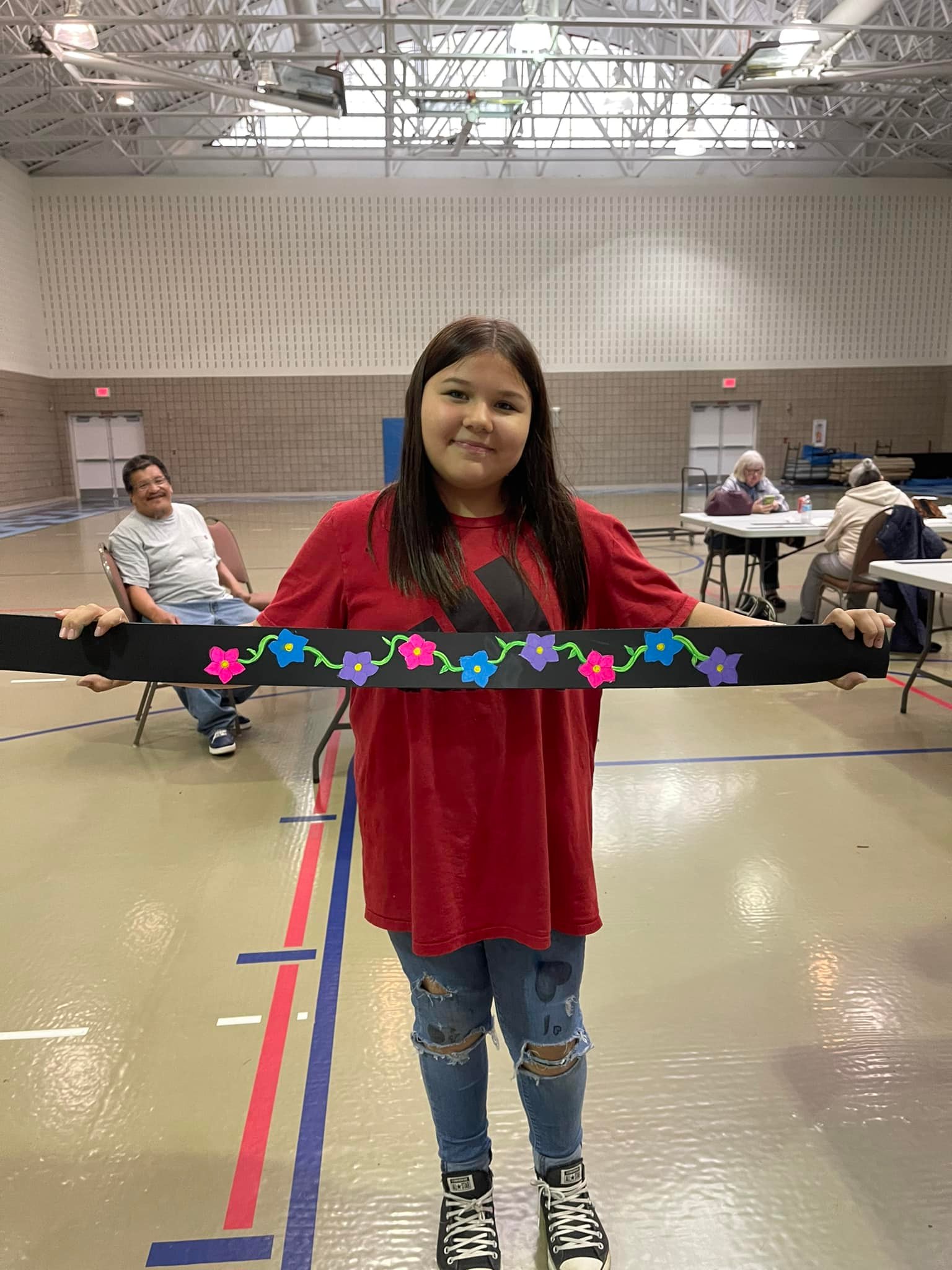
The $150,000 Rural Leadership Boost Grant enabled Wanetta, Lana and Laikora to create community art rooms at rural tribal community centers in Mille Lacs, Hinckley and McGregor, and to facilitate monthly projects open to the entire community and featuring professional cultural education and instruction on a different cultural item – moccasins, ribbon skirts, belts and bells, blankets, beadwork, and drums and sticks. The program is called Maadaoonidiwag, the Ojibwe word for “sharing knowledge.” Each course taught 120 people, and three of the courses — moccasins, ribbon skirts and blankets — included a make one/give one model where participants created their own personal item plus an additional item to be donated to community members without access to cultural regalia.
“We had an individual who was going through ceremony, and she needed moccasins, and one of the participants from our class taught her how to make moccasins so that she could go through ceremony. Accomplishing that was awesome,” Wanetta shared. “I get emotional talking about carrying on our traditions and making sure that our culture stays alive. It’s really what our mission is, to make sure that we continue our tradition through art and that we create, because it’s not just art, it’s about healing. I believe that culture and art is healing.”
Beyond the make one/give one model, program volunteers would use scrap materials from classes to make additional items such as bells, moccasins, ribbon skirts, and loin cloths that were donated at the Mille Lacs and East Lake Traditional Pow Wows. Each class was captured on film to preserve the historical teachings, and the year of projects concluded with a celebratory art show featuring participants’ projects at the East Central Regional Arts Council.