Funding resources, skills, and needed system changes in rural Minnesota’s smallest communities.
Funding resources, workforce capacity, and required system improvements in rural Minnesota’s smallest communities will be prioritized. Preference will be given to communities with populations under 5,000; for regional initiatives, each participating community must also have a population below 5,000.
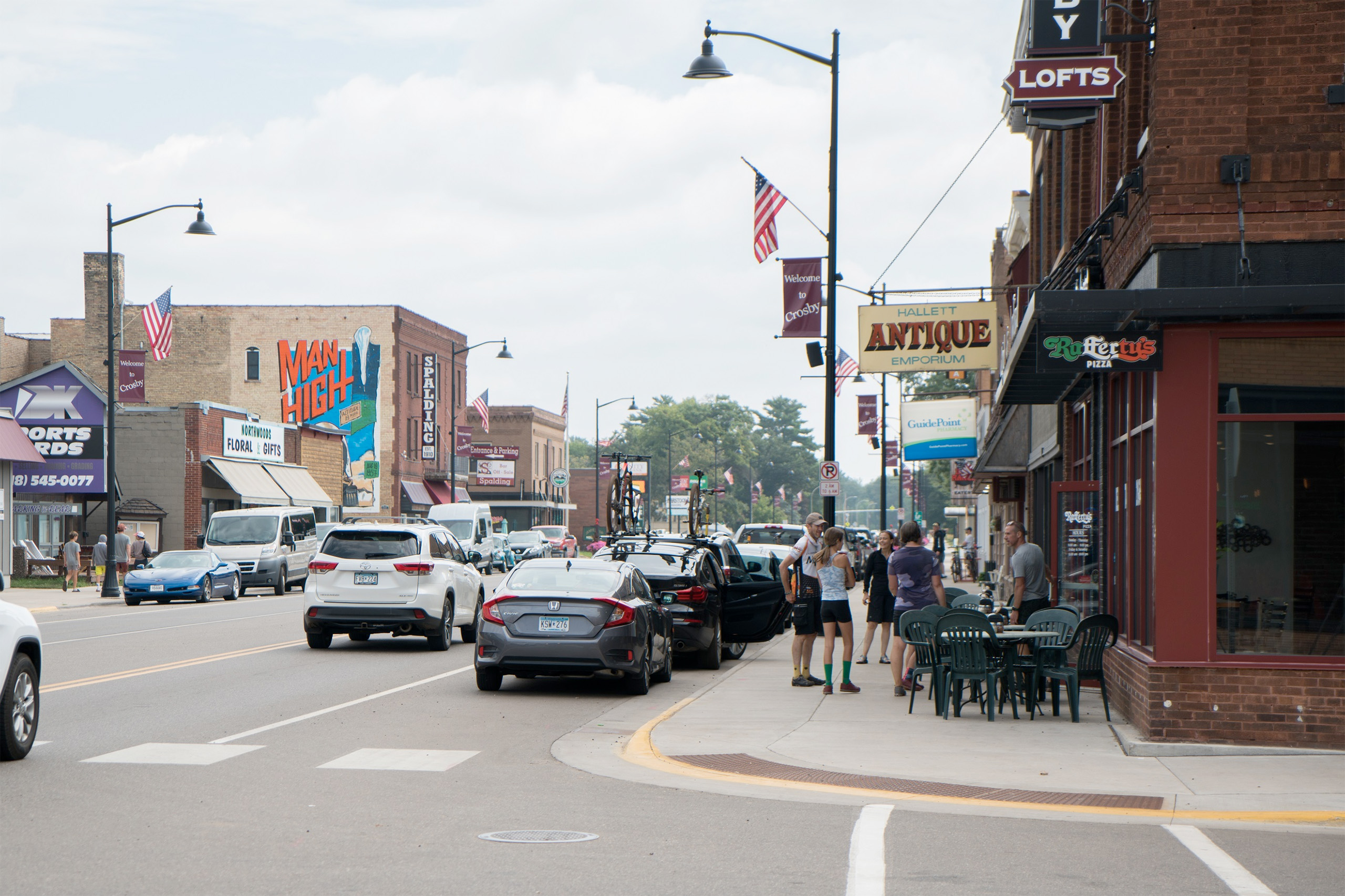
Our Small Communities Grant Program is a program focused on reaching small, often overlooked places, and providing funding for the resources and skills they need to solve community issues. It is one important way we can improve community well-being and begin to reverse decades of fiscal policies and practices that have harmed rural places and the people who live there.
The Small Communities Grant Program will build on the pride rural residents feel for their communities. Rural connection and interdependence can be powerful community forces. When people work together to solve community issues, they create trust, ownership and buy-in which again translates to success with completing projects and initiatives, and ultimately strengthening the community. Activities funded by our Small Communities Grant Program should drive positive economic, physical, and social change in a rural community.
Blandin’s Value Framework
Build Rural Capacity
Strengthening the resources and skills rural MN needs to address community problems and opportunities. We are focusing our funding and programming on strategies that produce measurable, sustainable outcomes in our three impact areas and those that can demonstrate coordinated, regional impact.
Small Communities Grants will be made in the following three categories listed. This does not imply applicants submit proposals based on the examples outlined below. We are interested in your own creative ideas to move small places forward.
Planning
Planning for a small communities initiative.
Plan and design programs, inclusive community events, public spaces, and community amenities that improve wellbeing and increased livability.
Research to support community planning or increased access to grants and other financial resources.
Plan for future land use, such as housing and business development needs
Prepare community for future data and information collection, such as the 2030
Census.
Implementation
Executing a small communities initiative.
Implementing community initiatives, that create, enhance or revitalize indoor and outdoor physical spaces, such as:
Community gathering and ceremonial places.
Community centers.
Business development and support of entrepreneurs
Repurposing buildings.
Libraries.
Parks and trails.
Capacity Building
Building small community skills and attracting resources.
Build the skills and resources of a community or organizations to drive positive economic, physical and social changes:
Strategic planning, fundraising and governance support
Consulting expertise, including inter-generational knowledge sharing.
Leadership skill-building.
Collaboratively changing how systems work and the outcomes they produce.
Outcomes We Seek
Proposed projects should impact one or more of the following objectives and should include a description of how your organization will measure progress toward those. It is acceptable to measure “what happened/what’s different” (qualitative data) along with or instead of “how many or how much” (quantitative) because impact in small rural communities is often challenging to demonstrate with numbers only.
1. Prepare for the future by enhancing community aesthetics and amenities, cooperating with neighboring communities for mutual benefit, and laying the groundwork for future development.
Visible community change in structures and amenities
Established partnerships with other communities or partners, local business and job growth
Completing professional development and skill building and training opportunities.
2. Bring about positive, visible change in the community, including increasing community/leadership engagement, planning, nurturing community pride and revitalization.
Visible community change in structures or enhancements, new construction and beautification
Increased civic engagement
Survey results showing increased pride in place.
3. Engage in broad-based conversations around issues affecting small, rural Minnesota communities, that include voices across race, class, gender, and other self-identified differences.
Notable signs of a more connected, engaged and less divisive community, including possible survey results, social media tenor, examples of new community cohesion, policy changes or advocacy.
Timeline
Milestone
Date
Letter of Inquiry Opens
April 1, 2026
Letter of Inquiry Closed
April 17, 2026
Proposal Opens
April 27, 2026
Proposal Closed
May 15, 2026
Application Review Period
May 8 – June 5, 2026
Organizations Notified of Grant Award
June 19, 2026
These dates may change depending on the volume of applications received.
Video: 2026 Rural Grant Round Overview
Eligibility & Applications
LOIs open on April 1 for statewide rural non-profit organizations.